
 This Theosophical Encyclopedia contains all the articles of the printed
  Chinese, Simplified
 English
 Français
 Español
 Chinese, Traditional
Book Review: The Mother of All Religions
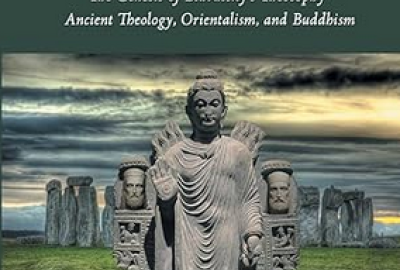
The Mother of All Religions: The Genesis of Blavatsky's Theosophy, Ancient Theology, Orientalism, and Buddhism
Author: Urs App
BOOK REVIEW by Richard Smoley - published in Quest, Winter 2026
Urs App states the central thesis of his book by saying, “Whatever [H.P. Blavatsky] knows appears to be drawn not from native teachers and texts but from Western printed sources that she often criticizes and reinterprets to fit into the Procrustean bed of her ideological framework.”
App argues that everything Blavatsky wrote and thought came either from books she had read or her own imagination. He devotes the entirety of his work to proving this thesis. Nevertheless, its errors in both logic and use of evidence, as well as significant omissions, leave it as a pretentious but unconvincing analysis of HPB’s thought.
App argues correctly that one of Blavatsky’s prime objectives was to prove the existence of a primordial esoteric tradition that underlies all world religions. But his attitude toward this tradition is peculiar: he repeatedly connects it with orientalism (a somewhat discredited scholarly approach from the eighteenth and nineteenth centuries) as if it had never appeared anywhere else: “The present work—focused as it is on the idea—of a unique primeval wisdom-religion presented as the esoteric mother of all world religions—is more deeply connected with the construct of a single ‘Oriental philosophy’ than it may seem at first glance. In fact, both ideas are intimately connected to the Western discovery of Buddhism and, more particularly, to the idea of an ancient ‘esoteric Buddhism’” (vi).
App virtually ignores the fact this idea of a primordial tradition goes back in the West long before orientalism was ever thought of—for example, in the philosophia perennis or “perennial philosophy” of the fifteenth-century savant Marsilio Ficino.
Sometimes App does not even appear to understand what Blavatsky is saying. For example, Blavatsky mentions that “the ‘Stan-gyour’ is full of the rules of magic, the study of occult powers, and their acquisitions, charms, incantations, etc.” (221).
App upbraids her: “What she appears to ignore is that the Bstan-’gyur is not a single text but a huge collection of Tibetan Buddhist sacred scriptures containing more than 3,600 texts filling some 225 volumes.”
The Tangyur (so pronounced: Tibetan is neither spelled nor transcribed phonetically) is the second part of the major Tibetan canon (the first being the Kangyur) and is indeed voluminous. But what in Blavatsky’s statement implies that she believes it is a single text? All she says is that it is filled with spells and incantations, which it no doubt is.
Sometimes App’s own errors are comical. Blavatsky mentions a “Svabhavika” school of Buddhism. “Now,” writes App, “the trouble is that such a ‘Svabhavika’ Buddhist school . . . has never existed except in the imagination of some Western occultists” (215).
It took me fifteen seconds of Internet research to find a Wikipedia article on the Svabhavika school: “Dvaitadvaita Vedanta, also known as Svabhavika Bhedabheda and as Svabhavika Bhinnabhinna, . . . romanized: Dvaitādvaita Vedānta, Svābhāvika Bhedābheda, Svābhāvika Bhinnābhinna) is the philosophical doctrine of ‘natural identity-in-difference’ or ‘natural difference cum-non-difference’” (emphasis in original).
Of course Blavatsky used the published sources available to her. But App consistently argues that if she cites one of these sources, she could have only gotten this information from this source and no other.
Take the etymology of the name of the Master Koot Hoomi. HPB replies to the criticism of an orientalist that this could not be a Tibetan name, citing one Mr. Lillie, “an expert at the British Museum,” who “ransacked the Tibetan dictionary for the words ‘Koot’ and ‘Hoomi,’ and found no such words.” HPB retorts, “I say, ‘buy a better dictionary’ or ‘replace the expert by a more expert one.’ Let Mr. Lillie try the glossaries of the Moravian Brothers.”
Blavatsky is alluding to a Tibetan dictionary compiled in 1866 by a Moravian missionary named Heinrich August Jäschke. Here App finds that “ku” is “an honorific prefix, while “thu-mí” is “an inhabitant of a neighboring country. Koot Hoomi thus means ‘honorable inhabitant of a neighboring country’” (267).
App erroneously concludes that because Blavatsky refers to Jäschke’s glossary, she must necessarily have learned it from that glossary and in no other way. It is as if I cited a dictionary definition and you immediately concluded that I could only have learned this word by finding it in that dictionary. Such shoddy reasoning appears on practically every page of this book.
Similarly, App contends that Blavatsky got the idea of the tripartite human entity of spirit, soul, and body from Sir Edward Bulwer-Lytton’s occult novel Zanoni (77). App does not say that this idea of the tripartite human entity goes back to the earliest days of Christianity, as I have shown in my book Inner Christianity. There is no reason to blindly assume that HPB got it from Bulwer-Lytton.
Of course App regards the Masters and ancillary figures—along with their teachings—as complete fabrications by Blavatsky. Yet sometimes he cites material that contradicts his own thesis. He refers to a period when Blavatsky, at a retreat, attempted to explain occult teachings. A.P. Sinnett, who was present, reports: “The situation was curiously embarrassing. Madame Blavatsky in spite of all her shortcomings was our only channel of communication with the occult world. At first, crediting her with more knowledge than she actually possessed we endeavoured to extract specific teachings from her . . . I have the M.S. book in which I recorded the results, which were of a very unsatisfactory character” (277).
Blavatsky, the sole source and font of all her ideas, according to App, could not even provide a coherent account of the occult teaching when left to her own devices. App writes:
<EXT>When faced with the accusation that Blavatsky had invented the Mahatmas and that they are “men of straw,” Blavatsky resorts to an argument she had frequently made, namely, that her works as well as the Mahatma letters are proof to the contrary because she was not clever enough to have authored them. Thus, she argues, the charge of her having invented them would amount to “the greatest compliment that could be paid to her.” </EXT>
App is willing to pay her that compliment, although he cannot make it convincing.
If Blavatsky were the sole source of the Mahatma Letters, what are we to make of passages like this? K.H. writes:
<EXT>Another fine example of the habitual disorder in which Mrs. H.P.B’s mental furniture is kept. She talks of “Bardo” and does not even say to her readers what it means! As in her writing room confusion is ten times confounded, so in her mind are crowded ideas piled in such chaos that when she wants to express them the tail peeps out before the head. (305)</EXT>
By App’s theory, HPB here is writing about herself.
App implies, as he must, that all of the Masters and similar figures—and the Brotherhood of Luxor to boot—were concoctions of Blavatsky’s imagination. Yet this would require superhuman machination that neither HPB nor anyone else could pull off, even granting the unlikely possibility that all her associates were either dupes or confederates.
Furthermore, there is a long tradition in many esoteric lines of hidden or unseen Masters, the maggid or “teacher” of the sixteenth-century Kabbalist Joseph Karo being only one example. App does not even try to relate HPB’s Masters to this tradition.
Tracking down Blavatsky’s sources, App naturally focuses on nineteenth-century works. But he appears to be oblivious to later scholarship on Hinduism and Buddhism: his bibliography makes virtually no mention of authorities from the twentieth and twenty-first centuries. He does not mention one single authority on Hinduism or Buddhism, from either an academic or a traditional perspective, who attempts to debunk HPB’s views. Nor does he even try to assess the degree to which, in instances where HPB upbraids the orientalists of her day, she was later vindicated.
Here is one example. App writes: “We . . . learn from Blavatsky’s ‘Tibetan friend’ that around the first century BCE the Buddhist refugees from India met representatives of a pre-Buddhist Aryan esoteric doctrine who had never left Tibet, and that the Indian Buddhists were surprised that the Aryan esoteric doctrine and our [Buddhist] Arahat doctrines are found to be almost identical” (323; bracketed insertion App’s).
All very fanciful—but perhaps not. In his monograph Dzog Chen and Zen, Namkhai Norbu, an authority on the Dzogchen tradition of Tibetan Buddhism, observes, “In the period before the introduction of Buddhism, there already existed a type of Zogqen [Dzogchen] teaching.” After Buddhism was brought to Tibet in the eighth century AD, Dzogchen, the “Great Perfection,” was incorporated into the Nyingma school of Tibetan Buddhism. Dzogchen consists in part of a meditative practice of resting in “pure awareness” and resembles Buddhist meditation. But Norbu and other authorities agree that Dzogchen antedates Buddhism in Tibet and was originally connected with Bon, the indigenous Tibetan religion. If we set aside the term “Aryan”—which today is as meaningless as it is prejudicial—we can see that Blavatsky’s “Tibetan friend” may have been right. App does not know this.
App’s work, like much of this type, rests on one unstated assumption: that anything that smacks of the paranormal is categorically false and must be the result either of fraud or delusion. But this thesis cannot be sustained, because it leaves a garment so full of holes that it could not be put on a body. Even App, despite his debunking, has to speak of the Masters as if they are actual men: the narrative would not be coherent otherwise. All this apart from eyewitness testimony of appearances of the Masters. HPB’s creation of K.H. would be a particularly spectacular feat inasmuch as he wrote a letter to Annie Besant in 1900, nine years after HPB’s death. (This is reproduced in the fall 2025 issue of Quest.) App evidently regards such evidence as unworthy of his attention.
Regrettably, one cannot be a mainstream academic scholar today without being in thrall to a naive secular materialism, even though this stance has been dismissed by practically all serious philosophers and scientists. Paranormal phenomena have to be dismissed out of hand, usually (as here) without any attempt at refutation. This position is particularly embarrassing when studying occultism and esotericism, which are precisely concerned with such phenomena.
App’s work has some value in citing a number of sources that Blavatsky used. But its logic and use of evidence are so weak, its assumptions so tenuous, and its erudition so shoddy that it cannot be taken seriously as a critique of HPB.
There is no authoritative study of HPB and Theosophy in its earliest years. Efforts toward that end have been hampered by hagiography on the one hand and oafish debunking on the other. Blavatsky is an equivocal figure and cannot be taken purely at face value: she often contradicts herself and talks out of both sides of her mouth. But she cannot be dismissed as a mere fraud, however ingenious and well intentioned.
We cannot say where further studies of early Theosophy will lead. But we can say with confidence that the secular materialist assumptions of current academic scholars of Western esotericism will not take us where we need to go.
Richard Smoley